Wednesday, February 25, 2009

Easter Island


By Alena B.

Today I'm going to tell you about an amazing island that is part of Chile. The island is called Easter Island and is located on the Pacific Ocean about 2,000 miles from Chile. Yes! 2,000 miles!
The nearest island is 1,000 miles away. We're about 1,000 miles from Florida, can you imagine having your closest neighbors THAT far away?

The natives settled here 1,500 years ago and they called their island Rapa Nui because the island was shaped like a canoe paddle and Rapa Nui means canoe paddle.

Easter Island was discovered on Easter by Dutch Explorers in 1722, and that's how it got its name.

The island is surrounded by enormous statues called Moai that were carved from volcanic rock found on the island. The native people moved the statues all around. Most of the statues are 13 feet tall but one is 72 feet high and another is 32 feet high and weighs 82 tons.

887 Moai have been found around the island. One interesting fact is that the statues face towards the center of the island not toward the ocean. Eventually, the native people all died.

You can visit Rapa Nui or Easter Island today to see these amazing statues.

Wednesday, February 18, 2009

The Atacama Desert in Chile


By Genevieve S.

I'm here to tell you about the driest place on the earth! This desert is located in Northern Chile between the Andes Mountains and the Coastal Mountains along the Pacific Ocean. It's called the Atacama Desert, it is 600 miles long, and it is the driest place on the planet.

It is the driest because of something called a rain shadow. Warm moist air that rises up the mountainside where it cools and loses water before reaching the desert. This makes the desert really dry because of the mountains on both sides.

The desert has several salt lakes that formed long ago. Now, they are evaporating and concentrating the mineral salts in the water. The Atacama is one of the only places on earth that rain has never touched. Plant life in the desert is supported by marine fog called camanchaca.

One really neat fact is that the soil that is found in the Atacama desert is like soil found on Mars!

Chile – the National Dance and Mapuche People


By Julia C. and Ariel B.

The national dance of Chile is called the Cueca. The Cueca has Spanish and African influences. The dance looks like a rooster attracting a female chicken. The rooster acts crazy and the female chicken looks embarrassed and shy while they are doing the dance. When a boy likes a girl, instead of asking her out on a date, he will ask her to dance the cueca at festival or celebration.


The Mapuche people live in Central and Southern Chile. Traditional Mapuche live in big wooden huts with thatched roofs, which only one family can live in that is called a ruka. Before Spanish invaders, the Mapuche lived in rukas that were built far away from each other, but war and other fighting taught the Mapuche that it was safer to live closer together. The Mapuche Indians create instruments that are known as zamonas (pan flutes) and kultrunes (drums) which are used in special ceremonies. These talented indians sing folk songs, or tonadas, and these folk songs are often sad.

Thursday, February 5, 2009

Letters to World's Finest Chocolate

Here are some letters our jungle club members wrote to the 8th largest chocolate company in the U.S. and the leading manufacturer of chocolate for fundraisers in schools, churches and community groups. The letters are meant to encourage World's Finest Chocolate to use Fair Trade cocoa in their products. You can see from the emotion in these letters that the students were anxious for change after learning about the problems facing chocolate farmers in South America and other countries where cocoa is grown:

Edmond Opler, Chairman and CEO
World's Finest CHocolate
4801 Lawndale
Chicago, IL 60632-3062
+++++++++++++++++++++++++++++++++++++++++++++++++++++++

Dear Mr. Opler,
I love chocolate. But the way you get chocolate makes me not want to eat chocolate. I am 10 years old and I can go to school, but the children who are forced to make chocolate cannot go to school.
You should consider the well being of all children who are working for you. Please make it possible that they can go to school.
Please try doing fair trade chocolate. And stop forcing children to work on your cocoa farms.
Sincerely,
Sophia S.
++++++++++++++++++++++++++++++++++++++++++++++++++++++++++++++

Dear Mr. Opler,
I am beside myself that coca farmers do not have a choice like me. So you need to help them and start selling Fair Trade Products.
START SELLING FAIR TRADE PRODUCTS!
From,
Emma F.
+++++++++++++++++++++++++++++++++++++++++++++++++++++++++++++++

Dear Mr. Opler,
I love chocolate but don't like the way you do it. You shoud let children go to school. I am also disappointed that cocoa farmers don't get paid enough money. Also you shouldn't use child slaves. Please use Fair Trade Chocolate.
Sincerely,
Emma B.
+++++++++++++++++++++++++++++++++++++++++++++++++++++++++++++++

Dear Mr. Opler,
I feel really disappointed that children are working on cocoa farms instead of going to school. I am also disappointed that the farmers who are working on the farms aren't getting paid enough. But if you use fair trade chocolate, farmers will get paid more and then their cildren will be able to go to school and get an education. PLEASE USE FAIR TRADE CHOCOLATE!
Sincerely,
Ariel B.

+++++++++++++++++++++++++++++++++++++++++++++++++++++++++++++++
Dear Mr. Opler,
It makes me very mad that the children are not able to go to school since all cocoa farmers are poor. The children aren't able to go to school so they will be poor and so will their children. I HATE the way that you use children slaves.
For these reasons you should start selling Fair Trade chocolate.

YOU CAN MAKE A DIFFERENCE!!

Sincerely,
Emma R.

Wednesday, February 4, 2009

Where Does Chocolate Come From?


Have you ever thought about where chocolate comes from? Well, even though chocolate tastes good, the story isn't so sweet. Chocolate comes from the dried beans of the cocoa tree and one of the places where this tree grows is Bolivia. Cocoa trees need about 80 inches of rain per year. A cocoa tree grows near the equator and grows between 50-200 feet tall.

Many cocoa farmers are very poor and only get about $.25 per pound of cocoa. Because families are so poor, many children have to work to help support their families. Even worse, some children have to work as slaves on these farms. These children support their families by working in fields all day long instead of going to school. Some cocoa farmers don't care about the land and hurt the rainforest by cutting down trees or using chemicals on plants to grow the cocoa.

But there is something that we can do to help! We can buy fair-trade chocolate. When we buy fair-trade chocolate, we help to pay a fair price for the farmer's hard work.

We wrote lots of letters to companies asking them to sell their chocolate fair-trade. We hope it will help!
Keep walking, Stoneleigh.

Tuesday, January 20, 2009

Women Wrestlers in Bolivia


by Catherine D. and Maya M.

La Paz is the highest capital city in the world at 11, 913 feet above sea level. In Bolivia, woman's wrestling takes place in a small town called El Alto high in the Andes mountains near La Paz. This is where woman's wrestling originated. The natives in this village are called Aymara and they participate in this event. The traditional costume is a ruffles skirt, petticoats and bowler hats.
Both men and women fight against each other. This Bolivian hobby helps the people forget they are very poor.

Tuesday, January 6, 2009

Welcome to Bolivia!


By Natalie M.

At our last Jungle Club meeting we learned about Bolivia. Some of the features include a small portion of the Amazon Rainforest, deserts called Chaco, and a type of plateau called altiplano. The Andes Mountains also run through this South American country, as well as vast plains of salt mineral called salt flats.

Although rain is rare at these white expanses of land, when it does rain, the water spreads like a sheet and gives the appearance of a lake. After the water evaporates, small pyramids form from wind and other elements.

Tourists come to see these unique attractions. While visiting, many stay at the Salt Hotel, a building created from large blocks of salt. There are 10 billion tons of salt that make up Bolivia's Salt Flats today.

Monday, January 5, 2009

The Navidad Holiday in Paraguay


December 17, 2008

Hello, Stoneleigh. This week we walked another 103 miles in Paraguay. Before we leave the country, let’s learn about the holiday they are preparing to celebrate.

Right now, children are very excited about a holiday called “The Nativity” or “Navidad.” In Paraguay, it’s summer right now, the weather is warm, and there are blooming flowers EVERYWHERE. Early in December, holiday decorations, especially the manger scene, or nativity, are set up in homes, on the streets, in factories, and in the shopping centers. The nativity must be in every Catholic home.

Churches and homes are decorated in bright colors to match the colorful flowers. At midnight, church bells will begin to ring and call the people to mass. This ceremony is called “The Mass of the Rooster.” Families set off a huge fireworks display at midnight on Christmas Eve to celebrate the nativity. Presents are normally only given to children.

January 6th is the Feast of the Epiphany or the Feast of the Three Kings. The children of Paraguay set out a pair of shoes with letters to the Three Kings on this night and the Three Kings bring presents to the children.

We hope you’ll do a lot of walking over the holiday. Look at the bulletin board and our blog for the story of creation from the original Paraguay religion and more about children in Paraguay! Keep Walking Stoneleigh!

Thursday, December 11, 2008

Getting to Know Paraguay!

By Maya M., Claire P., Genevieve S, and Sophia S.,

Hello, Stoneleigh! We are currently in Asuncion, Paraguay and have walked 2226 miles!! Great job!

Our club is learning about a country called Paraguay. It's sometimes called "an island surrounded by land." It is located deep in the heart of South America. Not one of it's borders touches an ocean. People have lived in Paraguay for thousands of years. They lived in the lush forests of the eastern part of the country.

Early Spanish and Portuguese explorers arrived in South America in the beginning of the 16th Century. At first they had no interest in this part of the world, because it was also a land of extremes and finding food was difficult. They were very wrong because South America is a very beautiful continent!

At our club, Miss Trish L. came to talk to us about her experience living there as a Peace Corps Volunteer. One of the traditions she saw every day was drinking Yerba Mate. Yerba Mate is a tea produced from the leaves and stem of an evergreen plant. To make the drink, the plant leaves and small stems are picked and dried. They leaves are then crushed and placed in the bottom of traditional gourd cup or cow horn. The leaves are steeped in hot water.

Paraguayans drink the tea through a bombilla or straw made of metal or wood. The bombilla has a filter on the end which prevents the crushed leaves and stems from being sucked into the drinkers mouth. Yerba mate is a refreshing drink served hot in cold weather and cold in hot weather. The indians believe that it cleared their blood, gave them stamina, and made them mentally alert.

Monday, December 1, 2008

Help Name Our Millipede Mascot

Good Morning Stoneleigh Walkers!  Did you forget to turn in your Walking Wednesday calendar before Thanksgiving?  You can still turn it in today or tomorrow to help your class win a visit from our millipede mascot.  The mascot will be living in the Walking Wednesday bulletin board display case until Wednesday morning.  Take a look during lunch an think of a good name for him/her and write it on your calendar!  Keep walking Stoneleigh!

Wednesday, November 19, 2008

Sophia S.: Hello, Stoneleigh Walkers! This week we walked 213 miles in Argentina from Buenos Aires to Parana. We would like to tell you about some of the foods from Argentina we got to try during the Jungle Club meetings.

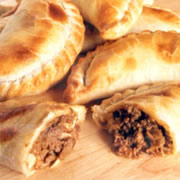
Emma R.: The empanada looks like a smaller version of a taco, but instead of cheese and lettuce, there is minced meat, cod fish, and chicken. In Argentina, it is considered the national dish. In Spain, the dish is called Galician empanadas, where as here, it is just called empanada.

Emma F.: Yerbe Mate comes from yerba which means herb and mate which is a hollow gourd used as a bowl for brewing yerba mate. Yerba Mate is a drink similar to tea and is very popular in South America.

Ariel B.: You typically use a special metal straw that has little holes at the bottom so that the chopped up leaves in the beverage aren't consumed. The Yerba Mate is made by using a gourd, as a bowl, and adding water and chopped up leaves. We hope you enjoyed listening about Yerba Mate and we encourage you to...

Keep Walking!

Wednesday, November 12, 2008

Animals of Patagonia!

The Patagonian Puma
by Julia C. Hello Stoneleigh!
We hope you are keeping track of when you walk on your new Walking Wednesday calendars. These are some of the animals we see as we walk through Argentina. The Patagonian Puma is from a place called Patagonia in Argentina. There are many pumas around the world, so there are different names for them in each language. You've heard of the panther before, right? Well, the puma is a type of panther, but its also called a catamount and a cougar. You won't believe how many types of pumas there are! Well, to be exact, there are 27 types, but the Patagonian Puma lives the furthest south. It's one of the largest. Pumas can cross 10 miles of rocky terrain in a few hours. Pumas have been known to live in almost any habitat.


The Patagonian Gray Fox
by Alex Z.
The Patagonian Gray Fox is truly an animal all its own. It evolved from the wolf family about six to seven million years ago. The average gray fox is about two feet tall and six to ten pounds. It eats hares (rabbits) and other small rodents. When food gets scarce, the gray fox eats berries, bird eggs, insects, and sometimes leftovers of puma's prey. When female gray foxes don't have litters, they bring food to fox families that do.


The Guanaco
by Maya M.
The Guanaco is a relative of the domesticated Illama. It is Patagonia's largest land vertebrate. Its habitat is the Plains of Torres del Paine. They live in groups consisting of a single dominant male and up to 10 females and their young.


Magellan Penguins
by Genevieve S.

Magellan Penguins are penguins that are migratory seabirds. They arrive during spring at the coasts of Patagonia Bay. During the cold months, they travel more than 3000 kilometers to warmer areas of South America. The baby penguins are born in November. The baby males weigh about 5 kilos and are bigger than females. They spend a lot of time cleaning their feathers and trying to look pretty. They are very conceited.


Magellan Penguins
by Alena B.
Many penguin families return to the exact nest that they made the year before. At the Punta Tombo colony, there are more than half a million penguins every year! Males and females share all the birth tasks: they build their nests together, they look after and defend the nest, they incubate the eggs together. The same happens at the moment of feeding – they take turns doing it.

Friday, November 7, 2008

The Inca Rose

By Genevieve S.

The Inca Rose is the national stone of Argentina and is a rare and beautiful pink quartz-like stone with wavy bands of veins. Mined in Catamarca Province in Argentina at the Northwest edge of the Andes Mountains, the Inca Rose is found in stalactites which are long icicle-like formations formed by dripping from the ceiling of the cave. The Inca Rose was discovered by the Incas in the 13th Century and mined along with silver. Incas are a native South American people that once ruled one of the largest and richest empires in the Americas. Their empire covered much of present-day Ecuador, Peru, Bolivia, Chile, and parts of Columbia and Argentina. The Incas believe the Inca Rose was the blood of former kings and queens turned to stone. In the 1930s, the mine was rediscovered and an Incan tomb was unearthed. Mummies in the tomb wore amulets or funeral jewelry made of Inca Rose.

We also tasted fresh cut mango and delicious Dulce de Leche Girl Scout cookies! Thank you, Miss Becca, for today's snack!

Thursday, November 6, 2008

Tierra del Fuego

by Anne Z, Emma B., and Natalie M.
While sailing for India, Magellan named an island on his route, Tierra del Fuego. In English, it means “land of fire.” The reason he called it this was because the native people lit huge fires to heat up the freezing air.

Tierra del Fuego meaning the land of fire consists of one large island, five medium sized islands, and numerous small islands that is half in Argentina and half in Chile. The Andes Mountains run through the western part of Tierra del Fuego. The mountain peaks alternate with valleys where there are rivers and glacial lakes.

Wednesday, October 29, 2008

Walking Wednesday - Getting To Know Argentina


Ferdinand Magellan
Do you know who Magellan is? Ferdinand Magellan was a Portuguese sailor. He wanted to reach southeast Asia where many spices grew. He hoped to find a passage through South America so that he could sail all the way from the Atlantic to the Pacific. Magellan left Spain in 1519 with 5 ships and 260 men. At first, he did not tell them where they were going because he thought they would be too frightened to obey him. Magellan found the strait that is now named after him by chance. Magellan named our ocean “Pacific” because the ocean was calm and peaceful when he entered it. The crossing took 3 months and 20 days. Magellan and his men suffered a terrible hunger. They ran out of fresh food and many died of scurvy, an illness caused by a lack of vitamin C found in fresh fruit and veggies. He died on the 27th of April in 1521 on an island in Malaysia.

By Claire P.

Friday, October 24, 2008

10/24 Jungle Club Meeting

Our trek across South America begins at the southern most tip of Argentina in Tierra del Fuego (see the photo). What an amazing place to begin! We learned about the flag of Argentina, the Incan Sun God Inti, Magellan's travels through the Strait of Magellan, and how he named the Pacific Ocean, Tierra del Fuego, and Patagonia. The kids spent a lot of time taking the information we presented and creating wonderful morning announcements for the school that they will read each Wednesday on Walking Wednesdays.

For our snack (thank you, Miss Trish) we sampled Empanadas.
Our empanadas were purchased at our local Trader Joe's but if you have time (and a sense of adventure), try this quick and easy recipe. Your kids will love them!
http://www.grouprecipes.com/sr/20305/quick-and-easy-empanadas/recipe/

Wednesday, October 15, 2008

Walking Wednesdays - Learning About South America


Last week the entire school walked 1/2 mile during recess plus 10. That’s 300 miles toward our Walking Wednesdays Walk Across South America trek. Soon we will begin recording our daily walks to and from school. We will add them all together to help us walk from the Andes to the Amazon in South America.

Friday we had our first Walking Wednesday Jungle Club meeting. Here are some things we learned about South America:

South America is the fourth largest continent in the world but it only has 12 countries.

South America is home to the driest place in the world and the wettest! East of the Andes Mountains in Columbia, the Amazon Rain forest gets 463 inches of rain per year. To the west of the Andes Mountains in a desert in Chile, there has never been any recorded rainfall!

The Andes mountains are the longest mountain range in the world stretching all along the west coast of the continent.

Most South Americans live near the coast of their continent. In the middle of the rainforest there are less than 2 people per square mile!

By Natalie M.

Friday, October 10, 2008

First Jungle Club Meeting

Hello, Stoneleigh!
We tasted two delicious snacks this week at our first Jungle Club meeting.
Plantains are a crop of bananas that are typically used for cooking. The plantain crop is sometimes called the dessert banana. They are grown as far north as Florida, the Caribbean, and Central and South America in countries like Bolivia, Peru, Ecuador, Columbia, southern Brazil, the Canary Islands, Madeira, Egypt, Cameroon, Nigeria, southern Japan, and Taiwan. We ate Plantains at our first club meeting. We cooked them by slicing them lengthwise, deep fried them, and then we sprinkled them with cinnamon and sugar on top.

Brigaderos are simple Brazilian chocolate candies created in the 1940s and named after Eduardo Gomes who was a Brazilian Air Force brigadier. Their shape is similar to some varieties of chocolate truffles. The brigadero is usually served at parties and is popular among both children and adults. It's about one of the most popular candies in Brazil. They were excellent!
Below are the recipes we used at home. Enjoy!
By Ariel B.
Brigadeiros (chocolate balls)

1 can sweetened condensed milk

5 heaping T. of Nesquick, or to taste

1 heaping T. of butter or margarine, or to taste

Chocolate sprinkles

Mix all together over medium low heat for approximately 15 minutes or until mixure has a thick consistency. Take off heat and put in the fridge until cool (about 1/2 - 1 hour). Butter fingers and shape into small balls (about the size of a small superball). Roll in chocolate sprinkles and place in little foil confection cups. A sweet Brazilian treat to enjoy! Makes approximately 24 little balls.

Fried Plantains (Brazilian Style)by

2 - 6 plantains, black in color

sugar and cinnamon

Slice blackened plantains length-wise and thinly. Heat vegetable oil in fry pan (approximately 1/4 inch thick with oil). Carefully place sliced plantains into hot oil. After a minute or so, turn the plantains and fry on other side. Remove from oil unto papertowel covered plate to dry. When cooled slightly, coat slices in a mixture of sugar and cinnamon and eat while warm.


Day 5: International Walk to School Week

Congratulations, Stoneleigh Students, for completing our 5th annual International Walk to School Week! 

We saw more walkers than ever this year.  

We ended our week-long festivities with fresh, hot coffee for our parents and chocolate for the kids - all to kick-off our yearlong trek across South America.

Thanks, especially, to our local Starbucks (located in our York Road shopping center) for their generous donation of delicous coffee, cups, cream and sugar.  THANK YOU!!! 

Wednesday, October 8, 2008

Day 3: International Walk to School Week


From One Less Car...
This week, all Stoneleigh students received a brochure to participate in the The Community Pace Car Program. This program gives Maryland residents a chance to impact traffic safety by taking charge of their neighborhood streets. People who sign the Community Pace Car pledge (see below) agree to put the Maryland Community Pace Car sticker on the back of their car and to actually obey the posted speed limit in their neighborhoods, thereby acting as a “pace car” for other motorists. Only a small percentage of vehicles acting as pace cars can effectively slow motor vehicle traffic in a neighborhood. When enough people join, traffic can be calmed city or county-wide. This makes conditions safer for bicyclists, pedestrians and transit users. As safety conditions improve, people feel more comfortable walking, cycling or just waiting for the bus. This, in turn, makes conditions better for motorists by taking cars off the streets. A successful Pace Car program leads to tangible benefits for all road users.

COMMUNITY PACE CAR DRIVER PLEDGE

1. I will drive within the speed limit on all community streets in Maryland.
2. I’ll treat all pedestrians with respect and will share the road safely with them.
3. I’ll treat all bicyclists with respect and only pass them when I can give them at least 3 feet of safe clearance.
4. I’ll give myself enough travel time so that I’m not sacrificing courtesy or safety.
5. I will not be pressured by other driver’s impatience to drive above the posted speed limit.
6. I will devote my full attention to driving and avoid distractions such as cell phones.
7. I will choose to DRIVE LESS by walking, bicycling and taking mass transit when I can in order to reduce traffic, save money and improve the environment in my community.

WANT TO JOIN MARYLAND’S COMMUNITY PACE CAR TEAM?
If you didn't receive your pledge email sesjungleclub@gmail.com or email One Less Car directly- rchambers@onelesscar.org

Tuesday, October 7, 2008

Day 2: International Walk to School Week


Superintendent, Dr. Hairston, Ms. Roddy, and Mr. Leake from the Baltimore County School Office visit Stoneleigh Elementary to observe our Walking Wednesdays - International Walk to School Week festivities.

Monday, October 6, 2008

Day 1: International Walk to School Week...a huge success

Good morning!
Our first day of the International Walk to School Week was a huge success!

Child safety, the environment, and community awareness were highlighted on local news stations. Watch Fox 45 at 10pm to see kids from Stoneleigh walking to school and our interviews.

From Fox 45
http://www.foxbaltimore.com/players/news/top_stories/wbff_vid_1463.shtml

Sunday, October 5, 2008

International Walk to School Week!


International Walk to School Month gives children, parents, school teachers and community leaders an opportunity to be part of a global event as they celebrate the many benefits of walking. In 2007, millions of walkers from around the world walked to school together for various reasons – all hoping to create communities that are safe places to walk. (www.iwalktoschool.org)

Stoneleigh Elementary is so excited to celebrate International Walk to School Week with children around the world.